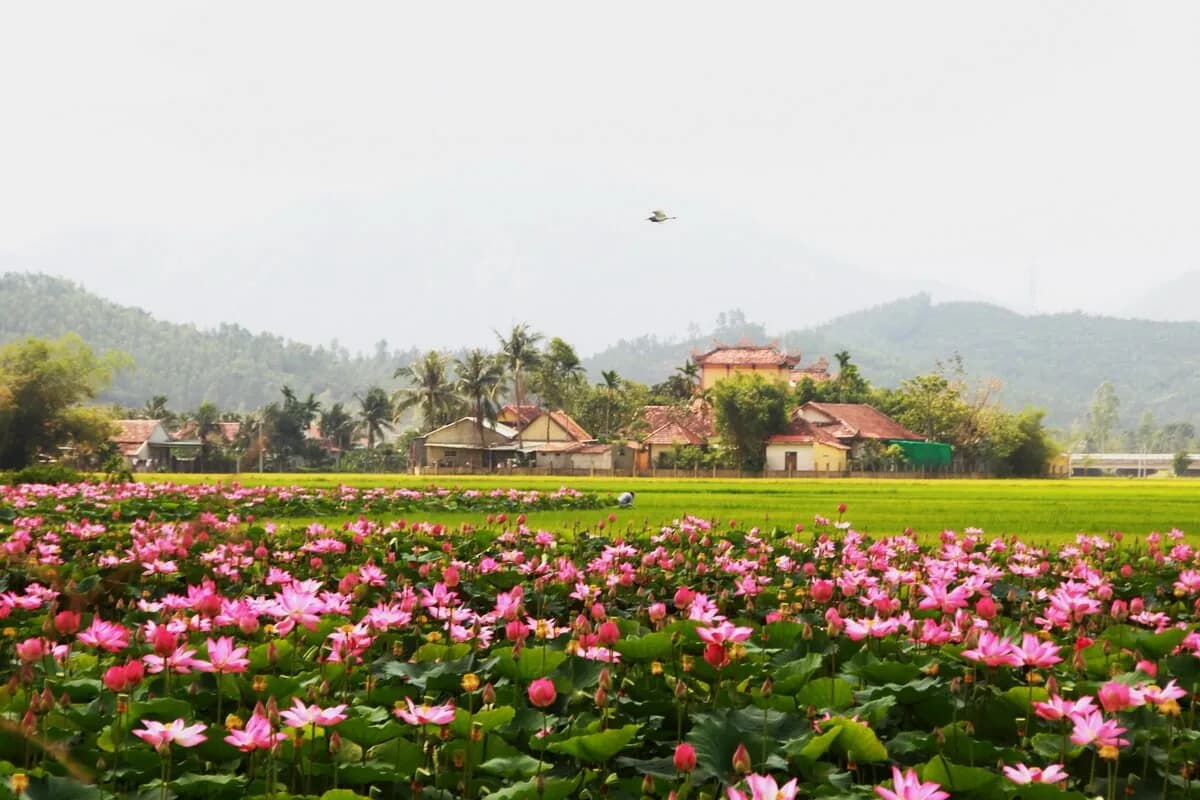
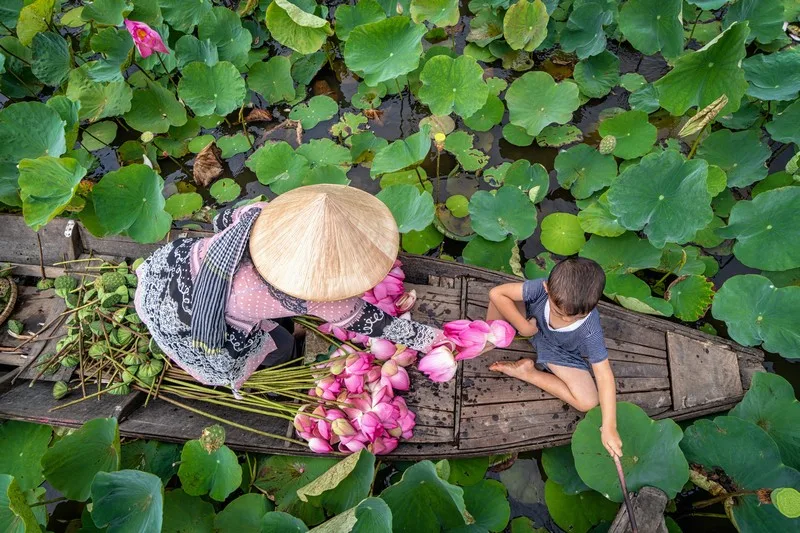
In Dong Thap, lotus fields reveal a different side of the Mekong Delta. Broad green leaves spread across the water, interrupted by pink blossoms and ripening seed heads. Beyond the photograph lies a working agricultural landscape and the ingredients behind a distinctive local cuisine.
A Mekong Delta food tour focused on Dong Thap can connect those two worlds. Visiting a lotus-growing area, learning from local hosts, and tasting dishes made with different parts of the plant brings the landscape into the meal.
The experience begins with a simple question: where does the food on your plate come from?
Discover more fascinating guides:
12 Most Beautiful Lotus Ponds in Vietnam: A Gentle Summer Amid Seas of Green
Tram Chim National Park: Discover the Mekong Delta’s Bird Kingdom
Why Choose Dong Thap for a Mekong Delta Food Tour?
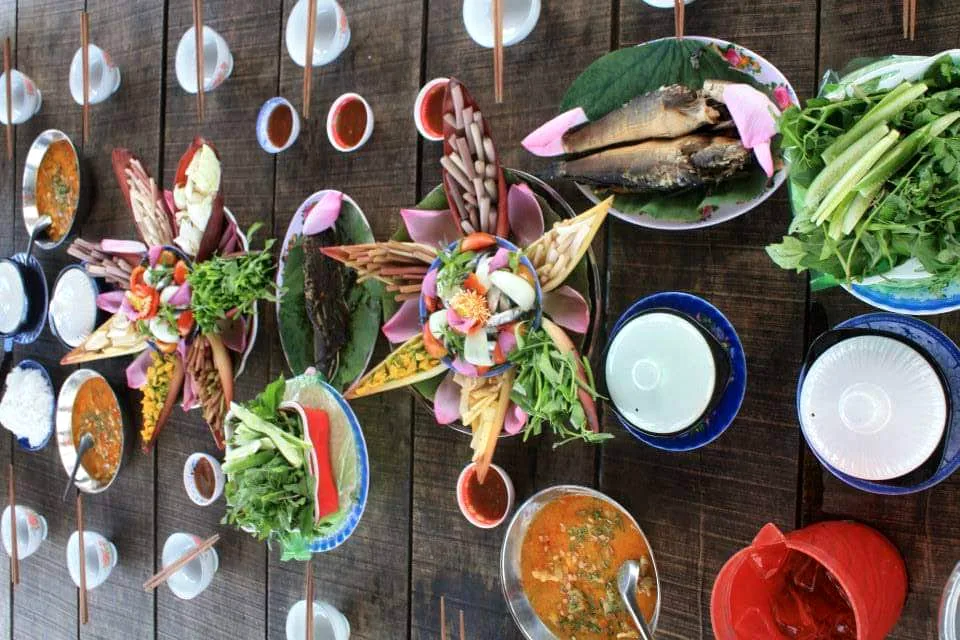
Dong Thap’s lotus-growing landscapes offer a natural starting point for exploring the relationship between agriculture and cuisine.
The plant provides several ingredients, each with a different role in the kitchen. Seeds bring a gentle, nutty character to dishes. Young shoots add crunch to salads. Leaves can wrap rice or accompany regional meals.
Around the lotus fields of Thap Muoi, visitor experiences combine scenery with food and agricultural activities. Local tourism sources describe boat rides, lotus picking, and meals served in shaded shelters beside the fields.
What makes the visit rewarding is the opportunity to connect a familiar ingredient with the work and knowledge behind it.
Start Among the Lotus Fields
A lotus-field visit can become the first chapter of your culinary itinerary.
Depending on the venue and season, activities may include traveling through the fields by small boat, picking flowers or seed heads, and learning how seeds are separated and prepared.
Participation should be arranged with the host. A sightseeing ticket does not necessarily include harvesting or cooking.
Understand What You Are Harvesting
“Lotus root” is often used loosely in English descriptions, but lotus ingredients are not interchangeable.
The thick, segmented part commonly called lotus root is a rhizome, or underground stem. It differs from the slender young growth known in Vietnamese cuisine as ngó sen, and from the seeds collected from the seed head.
Ask your host to show you the differences. Understanding which part is used—and how it is prepared—adds depth to the tasting that follows.
Do not assume a visit includes digging rhizomes from the mud. Confirm the actual activity, conditions, and equipment before booking.
Give the Farmers’ Work Time and Attention
Watching an experienced grower handle the plant can reveal details that disappear once the ingredient reaches a market.
Ask what the farm produces, when harvesting takes place, and how its crops are used. Different farms may prioritize flowers, seeds, or other products.
Those conversations make the experience more personal while avoiding the assumption that every lotus field operates in the same way.
What to Eat on a Lotus-Focused Mekong Delta Food Tour
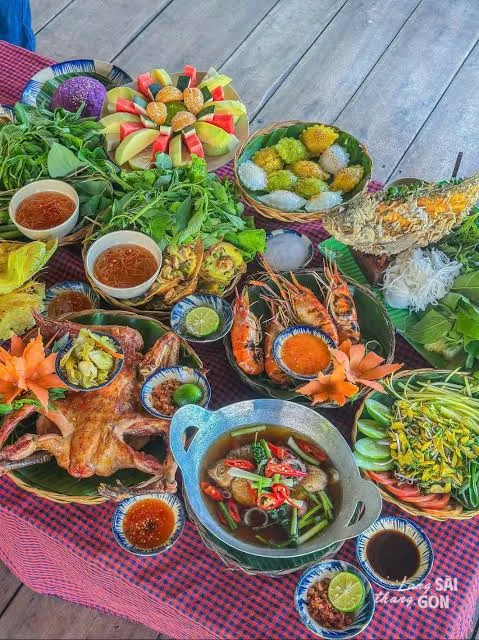
After exploring the fields, sit down to discover how lotus appears in local cooking.
Menus vary by venue and season. These dishes offer starting points for a conversation with your host rather than a guaranteed tasting menu.
Goi Ngo Sen: A Fresh, Crunchy Salad
Gỏi ngó sen combines crisp young lotus growth with a bright dressing. Versions with shrimp and pork are familiar examples, while ingredients vary between kitchens.
Its appeal lies in the contrast of textures and flavors: freshness, crunch, acidity, and savory accompaniments.
Ask about the dressing and toppings if you have dietary restrictions.
Rice Wrapped in Lotus Leaves
Com la sen, or lotus-leaf rice, connects the meal visually with the surrounding fields.
Recipes and fillings differ, so ask how the restaurant prepares its version. Opening the leaf at the table offers a simple reminder that the plant contributes more than flowers and seeds.
Chicken Cooked with Lotus Seeds
Chicken cooked with lotus seeds is another dish listed by Dong Thap’s tourism portal.
It offers a different expression of the ingredient from a fresh salad, showing how the same plant can contribute to both light dishes and a more substantial meal.
Lotus Seed Desserts and Drinks
Lotus seeds also appear in sweet preparations, including desserts paired with longan. Some venues serve lotus-seed drinks or other lotus-based refreshments.
A small tasting can reveal how preparation changes the ingredient’s texture and character.
Rather than trying everything, choose a few dishes and take time to learn what makes each one distinctive.
From Field Visit to Cooking Experience
For travelers who want more participation, some agricultural tourism programs describe activities such as separating seeds, preparing lotus drinks, or making lotus-based dishes.
Confirm whether a session is hands-on or a demonstration. Ask who leads it, what you will prepare, and whether the finished food is included in your meal.
A well-organized experience gives enough time for questions and preparation. It should also respect the difference between a visitor activity and the farm’s everyday production.
You do not need to harvest every ingredient yourself to understand the journey from field to table.
A Suggested Flow for Your Dong Thap Food Experience
Use this sequence as a planning framework, then adapt it to the venue’s actual services:
Part of the visit | Experience to arrange | What to confirm |
Arrival | Meet the host and learn about the farm | Location, opening hours, and current field conditions |
Field exploration | Walk along visitor paths or join a boat ride | Route, duration, and safety equipment |
Agricultural activity | Observe or join an available lotus activity | Seasonality, supervision, and participation fees |
Meal | Taste a selection of lotus dishes | Menu, portions, dietary needs, and price |
Optional workshop | Learn a preparation method | Advance booking and what is included |
This approach keeps the day connected without presenting a suggested itinerary as an existing packaged tour.
Supporting Local Livelihoods Through Food Tourism
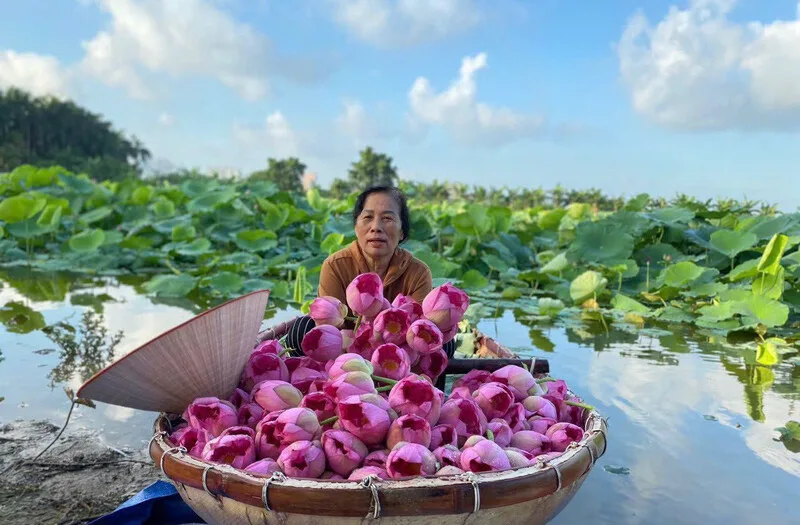
Lotus farming, food preparation, and visitor services can provide complementary sources of income.
Choosing locally operated meals, guiding, and agricultural experiences can direct spending toward participating households. Buying clearly labeled products also creates an opportunity to learn who grows and processes them.
However, a farm visit does not automatically demonstrate wetland conservation or regenerative tourism. Those claims require evidence about environmental practices and outcomes.
As a visitor, start with practical choices: pay fairly for people’s time, avoid damaging plants, keep rubbish out of the water, and follow the host’s instructions.
Planning Your Mekong Delta Food Tour
Before traveling, contact your chosen venue and confirm:
The exact address and directions.
Current lotus growth and available activities.
Opening hours and advance-booking requirements.
Meal choices and any additional charges.
Language support if you need it.
Arrangements for rain or canceled boat activities.
Bring drinking water, sun protection, and suitable footwear. If a supervised activity involves getting wet, ask what clothing or equipment to bring.
Tell the kitchen about allergies and dietary requirements beforehand. Lotus dishes may also contain seafood, meat, peanuts, or fish sauce.
For destination research, consult the Dong Thap Tourism Portal and confirm current details directly with the venue.
Conclusion: Taste the Landscape of Dong Thap
A memorable Mekong Delta food tour can begin long before the first dish arrives.
It starts among the leaves and flowers, continues through a grower’s explanation, and reaches the table in ingredients you now understand more closely.
In Dong Thap, lotus cuisine offers that connection: between agricultural work, local knowledge, and the pleasure of sharing a meal.
Take time to ask questions, taste thoughtfully, and appreciate the people behind the food. The flavor becomes part of a larger story.
Ready to discover more of the Mekong Delta? Explore outdoor destinations on ExoTrails, and save this guide for your next journey. Confirm seasonal activities and dining arrangements with your host before setting out.
Connect with our outdoor community and stay updated:
👥 Join our Facebook Group: Run, Trek & Camp | Basecamp Việt Nam — Share your favorite outdoor spots, trip reviews, and connect with fellow adventurers!
👍 Follow our Facebook Page: ExoTrails Worldwide — Discover outdoor inspiration, practical travel tips, and ideas for your next adventure.