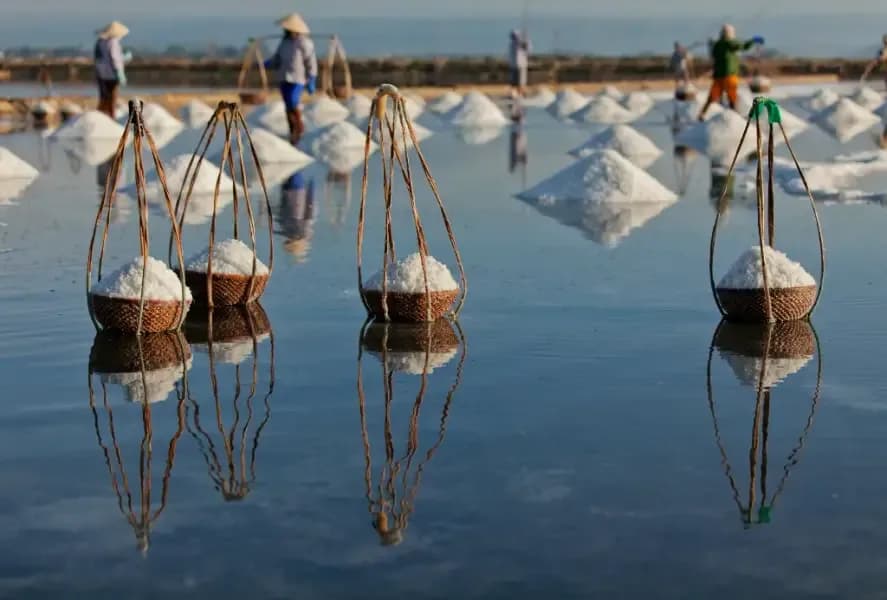

Before the coastal heat builds, shallow salt pans catch the first light. White piles rise above their edges, while workers move between the fields with rakes and freshly harvested salt.
The Hon Khoi salt fields reveal another side of coastal Khanh Hoa: a landscape shaped by sunshine, seawater, and the people who work with both.
For travellers exploring beyond Nha Trang, a thoughtfully arranged visit offers more than striking photographs. It is a chance to understand how an everyday ingredient begins its journey—and how much work lies behind it.
Discover more fascinating guides:
1. Where Are the Hon Khoi Salt Fields?
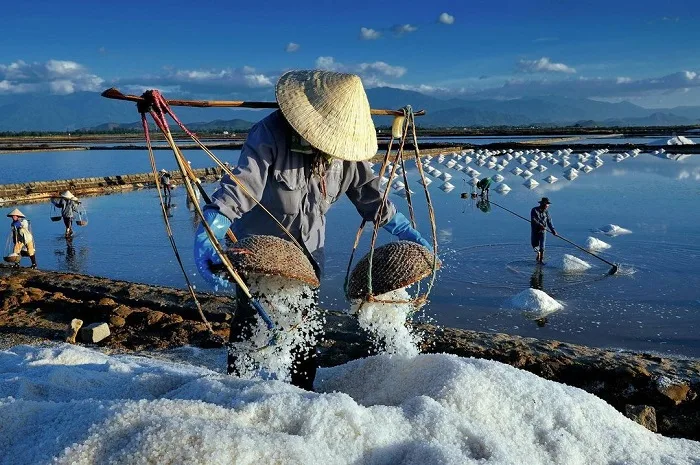
Hon Khoi lies in coastal Khanh Hoa, north of Nha Trang, in the area commonly associated with Ninh Hoa. Published travel reporting places the fields approximately 40 kilometres north of Nha Trang, although the distance depends on your starting point and the particular field you visit.
Hon Khoi is a working salt-producing landscape rather than a single attraction with one entrance.
When arranging transport, confirm a specific meeting point and an appropriate viewing location. A general map pin may take you to a production road without identifying where visitors can safely stop.
2. How Salt Is Made at Hon Khoi
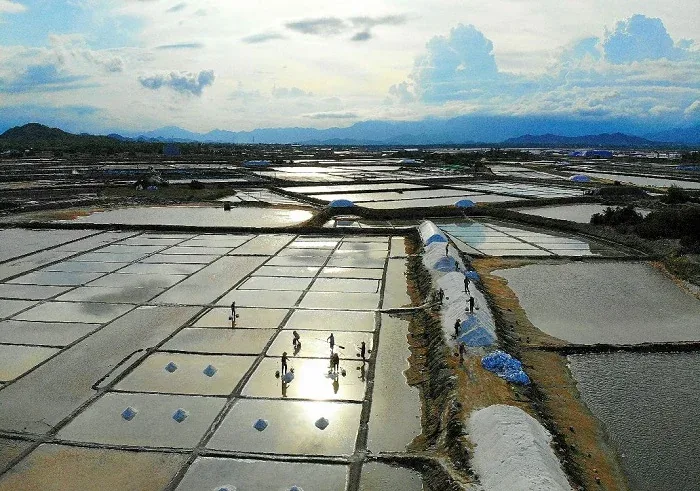
From Seawater to Concentrated Brine
Salt production involves several stages. Seawater is collected and concentrated through evaporation before entering crystallisation ponds, where salt can form under suitable conditions.
In an August 2026 report, local farmers described how sunshine supports the process, while rain and prolonged cloud can dilute the brine or prevent crystallisation. The time required varies with the weather and production method.
That dependence on conditions helps explain why a visit cannot guarantee active harvesting, even during the usual season.
Raking, Gathering, and Transporting the Salt
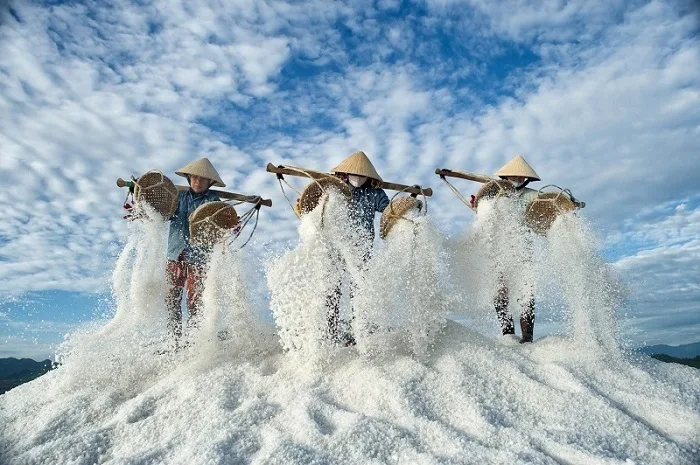
Photographic reporting from Hon Khoi documents workers draining fields, raking salt into small piles, and loading it onto carts for transport to collection areas. en.qdnd.vn
Watch the sequence if your visit allows it: the rake moving across the bed, the crystals gathering, and the harvested salt leaving the pan.
Shoulder poles appear in familiar images of Vietnam’s salt fields, but they are only part of the story. Equipment and working methods vary, so let the activity in front of you guide your understanding.
3. Best Time to Visit Hon Khoi Salt Fields
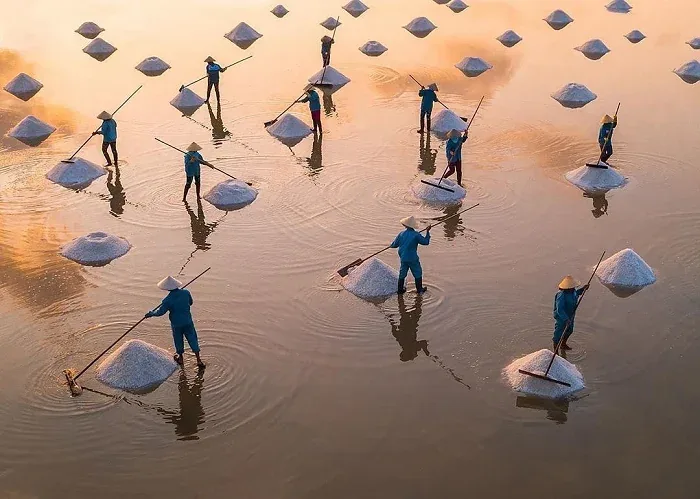
Choose the Production Season
Published accounts describe slightly different seasonal windows. A 2025 photo report identifies January–July as the salt-making season and highlights April–June for favourable harvesting conditions. Vietnam News Agency reporting describes production from March to July. April–June is therefore a practical overlap to consider when planning, rather than a guarantee of activity.
Recent rain matters as much as the calendar. Reporting from Hon Khoi has documented unseasonal storms diluting brine and delaying production.
Before travelling, ask a local contact whether harvesting is taking place and which fields can accommodate a visit.
Plan Around the Working Morning
Early morning is worth considering for both the light and the temperature. Farmers interviewed in 2026 described beginning work at around 4 a.m. to use the cooler hours before heat intensifies. This describes their working routine, not official visitor opening hours.
Arrange an agreed arrival time. If you are travelling before sunrise, confirm transport and a meeting point in advance.
4. What Makes Hon Khoi Interesting for Photography?
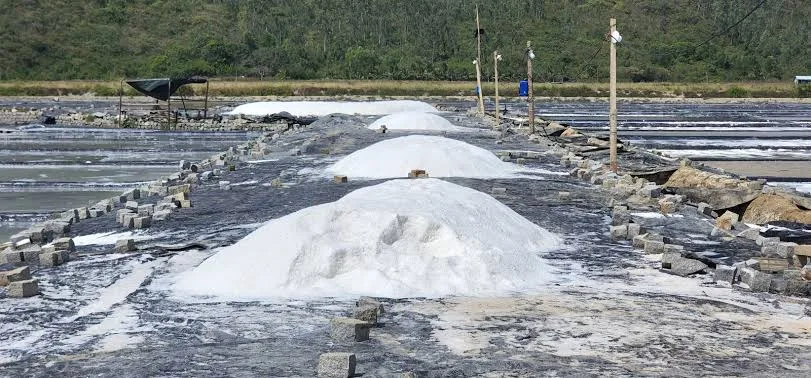
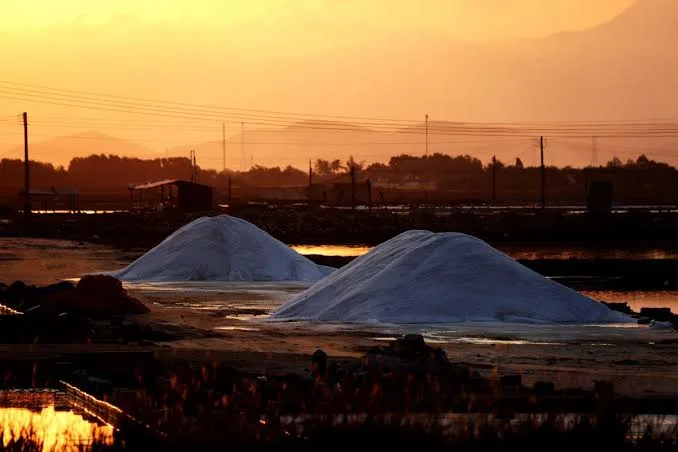
The fields create a striking arrangement of lines and shapes: rectangular pans, narrow embankments, and small piles of white crystals.
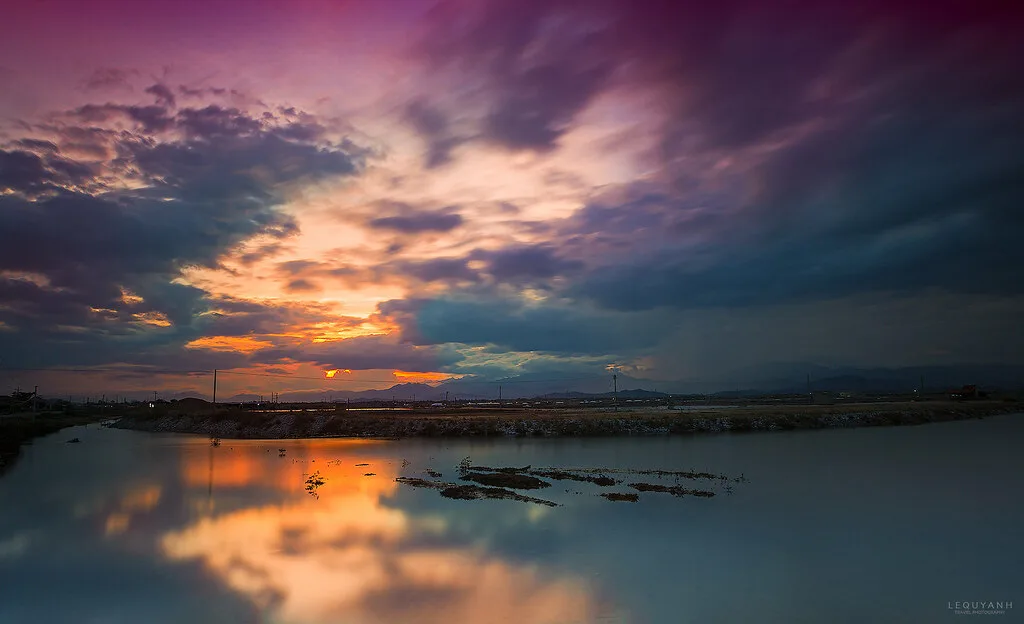
When water covers a pan and the surface is calm, reflections can add another layer to the scene. Other fields may be drying, being harvested, or awaiting the next production stage. Local tourism reporting describes these contrasting views across the day.
Photograph the Landscape Without Interrupting Work
For a considerate photography visit:
Ask permission before taking close portraits.
Keep access routes clear for workers and equipment.
Use a longer lens when space is limited.
Avoid asking people to repeat strenuous tasks for a photograph.
Follow the field owner’s instructions about where to stand.
Let the working day unfold naturally. A photograph can be memorable without rearranging the activity around it.
For another perspective on Vietnam’s working landscapes, read our guide to Quang Phu Cau incense village.
5. How to Arrange a Visit from Nha Trang
Speak with your accommodation or a local operator who can coordinate access with people working at the fields.
Before confirming a visit, establish:
Detail | What to ask |
Production activity | Is salt currently being harvested? |
Access | Who has agreed to the visit, and where can visitors stand? |
Timing | When should you arrive for the working schedule? |
Transport | Are pickup, waiting time, and the return journey included? |
Costs | Are there guiding, access, parking, or photography charges? |
Weather changes | What happens if rain interrupts production? |
Avoid assuming that every field has unrestricted access, fixed opening hours, or the same fee arrangements.
Build some flexibility into the morning. A worthwhile visit may involve observing one stage of production rather than seeing the entire process.
6. What to Bring
The open setting calls for simple preparation.
Item | Why it helps |
Hat, sunglasses, and sun protection | For exposed areas and bright conditions |
Drinking water | For comfort as the morning warms |
Secure footwear with grip | For uneven or damp access paths |
A compact bag | To keep belongings close in narrow spaces |
Camera or phone protection | To reduce exposure to splashes and salt residue |
A small rubbish bag | To carry away packaging and tissues |
Stay on the route indicated by your host. Do not walk into brine, climb salt piles, or handle tools without permission.
If visiting before daylight, let your host identify safe access rather than exploring unfamiliar embankments independently.
7. Recognising the People Behind the Landscape
The white fields may look peaceful in photographs, but salt production involves sustained physical effort.
Local reporting documents both the importance of the trade to families and the uncertainty created by weather and fluctuating prices. These realities are part of understanding Hon Khoi.
Be clear about any paid guiding or photography arrangements, respect a worker’s decision to decline a photograph, and leave production materials untouched.
If you want to buy salt, ask about packaged products intended for food use. A purchase offers an opportunity to learn about the producer without making assumptions about the qualities of raw salt collected from a field.
8. A Suggested Morning at Hon Khoi
This is a flexible planning framework, subject to permission and current work schedules.
Part of the morning | Suggested activity |
Before departure | Reconfirm the weather, production activity, and meeting point |
Agreed early arrival | Meet your host and identify suitable viewing areas |
Field visit | Observe the work and take photographs with permission |
Afterwards | Leave the production area clear and stop locally for breakfast |
Later | Return to Nha Trang or continue with a separately arranged coastal visit |
A short visit with good coordination can be more rewarding than staying longer in a place where your presence obstructs work.
9. Frequently Asked Questions About Hon Khoi Salt Fields
When is the best time to visit?
Consider April–June for the production season, then confirm recent weather and harvesting activity locally. Early morning can suit an agreed visit. en.qdnd.vn
Can I see salt harvesting every day?
No. Production depends on the condition of the brine, recent sunshine, rainfall, and the field’s working cycle.
Are the fields open to visitors at 4 a.m.?
A reported working start time is not a visitor opening time. Arrange permission and an arrival time before travelling.
Is there an entrance fee?
Confirm charges for the specific visit. Do not assume a universal fee or free access across the production area.
Can I walk between the salt pans?
Only where the field owner or your host permits it. Keep routes clear and avoid stepping into production pans.
Is this a trekking destination?
The experience is primarily about observing a coastal working landscape. Confirm walking distances and surfaces when arranging your visit.
Discover the Coast Through Its Working Landscapes
Hon Khoi offers a reason to look beyond the beach: water concentrating under the sun, crystals gathered by hand, and livelihoods connected to a changing coastal environment.
Arrive with permission, take time to understand what you see, and give the people working there room to continue their day.
Find inspiration for your next journey with ExoTrails, then confirm local access and arrangements before visiting.
Connect with our outdoor community:
Join Run, Trek & Camp | Basecamp Việt Nam to exchange travel experiences.
Follow ExoTrails Worldwide for more outdoor and cultural discovery ideas.