
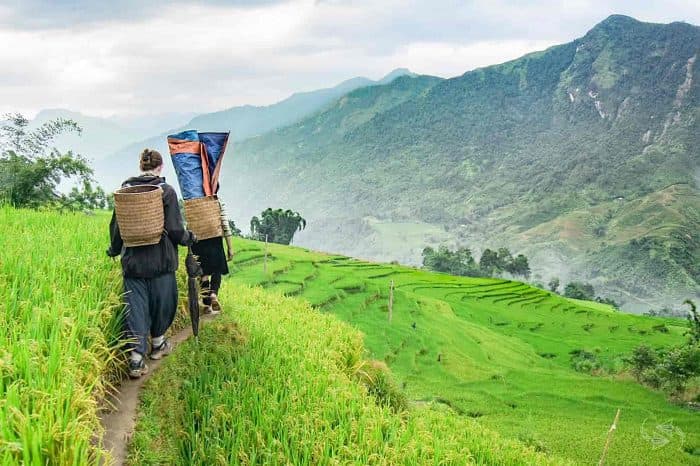

Vietnam has diverse terrain from mountainous plateaus to coastal plains. Trails are hidden deep in the mountains and forests, or resemble mountains and seas. In addition, countless ones were created in the human journey to explore nature. Therefore, the trails stretching along the shape of the country are also breathtaking.
However, it is not easy at all to start conquering these routes without being fully equipped. Having knowledge about trails, how to search and utilize relevant tools will bring you to the mountains, forests and seas more easily. Don’t wait any longer and find out right here!
Related posts:
 We often take trails for granted but each trail has its own story. Sometimes, the history of the trail you are taking can fulfill your outdoor experience. Some people think animals created the first trails, later adapted by humans. Or, you may hear about nomad or nomadic lifestyles. Back to early human civilizations, nomadic tribes crossed vast distances in search of better resources, climates, or habitats. Their movements and journeys drove creating trails.
Unveiling the Natural Charms of Camping Sites in Vietnam - Jan 2024
The early traders trekked across unknown lands, mapping routes and establishing trade connections. Many historic routes, like the Silk Road, the Amber Road and the Royal Road of the Persian Empire, existed before the Christian era and covered great distances.
We often take trails for granted but each trail has its own story. Sometimes, the history of the trail you are taking can fulfill your outdoor experience. Some people think animals created the first trails, later adapted by humans. Or, you may hear about nomad or nomadic lifestyles. Back to early human civilizations, nomadic tribes crossed vast distances in search of better resources, climates, or habitats. Their movements and journeys drove creating trails.
Unveiling the Natural Charms of Camping Sites in Vietnam - Jan 2024
The early traders trekked across unknown lands, mapping routes and establishing trade connections. Many historic routes, like the Silk Road, the Amber Road and the Royal Road of the Persian Empire, existed before the Christian era and covered great distances.

 Here are some reasons to use a trail app:
- ExoTrails: Love Outdoor Life - Perfect Your Experience
- Trekking as the No.1 Outdoor Escape: Embracing Nature's Trails
- Camping in Vietnam: Beaches, Mountains, National Parks, Forests, and More
Things you may know
History of trails
The term did represent a route into or through wild territory by explorers and migrants like the Oregon Trail. Now, it also indicates a paved or unpaved route for outdoor activities such as running, climbing, trekking, cycling, off-road driving, camping, etc. These paths pass through beautiful scenery and bring you closer to nature. We often take trails for granted but each trail has its own story. Sometimes, the history of the trail you are taking can fulfill your outdoor experience. Some people think animals created the first trails, later adapted by humans. Or, you may hear about nomad or nomadic lifestyles. Back to early human civilizations, nomadic tribes crossed vast distances in search of better resources, climates, or habitats. Their movements and journeys drove creating trails.
Unveiling the Natural Charms of Camping Sites in Vietnam - Jan 2024
The early traders trekked across unknown lands, mapping routes and establishing trade connections. Many historic routes, like the Silk Road, the Amber Road and the Royal Road of the Persian Empire, existed before the Christian era and covered great distances.
We often take trails for granted but each trail has its own story. Sometimes, the history of the trail you are taking can fulfill your outdoor experience. Some people think animals created the first trails, later adapted by humans. Or, you may hear about nomad or nomadic lifestyles. Back to early human civilizations, nomadic tribes crossed vast distances in search of better resources, climates, or habitats. Their movements and journeys drove creating trails.
Unveiling the Natural Charms of Camping Sites in Vietnam - Jan 2024
The early traders trekked across unknown lands, mapping routes and establishing trade connections. Many historic routes, like the Silk Road, the Amber Road and the Royal Road of the Persian Empire, existed before the Christian era and covered great distances.
What makes a trail a trail?
People may confuse trail, route, path, way, etc. While these terms sometimes overlap, a trail is essentially a designated path or route intended for outdoor activities (hiking, trekking, biking, running, camping, or off-roading). It's marked, planned, and often offers a scenic or enjoyable experience.- Designated Route: A trail is a designated pathway, often marked or signposted, created specifically for outdoor activities. It can be found in various terrains, including mountains, forests, coastlines, valleys, deserts, or urban areas.
- Intended Use: Trails are designed for specific outdoor activities like hiking, trekking, mountain biking, running, or off-roading. Each trail may cater to one or multiple activities, and its layout and features are optimized accordingly.
- Trail Verification: Trails often require verification to ensure they remain safe and accessible. This incurs efforts like coming back, clearing debris, repairing pathways, installing signs/markers, and managing the natural environment around.
- Varied Difficulties: Trails can range in difficulty, from easy and accessible paths suitable for beginners to more challenging routes intended for experienced adventurers. Difficulty levels can be based on terrain, elevation, distance, and other factors.
- Scenic Routes: Trails are often designed to provide scenic and enjoyable experiences, offering access to beautiful landscapes, unique natural features, wildlife, and points of interest along the way.
- Safety and Regulations: Trails may have specific rules or regulations in place for safety purposes. They might include guidelines for waste disposal, camping restrictions, fire safety, wildlife protection, and respecting the environment.
- Mapped or Documented: Trails are usually mapped, documented, or available on trail-specific apps or maps, providing users with information about the route, terrain, elevation, distance, and other essential details for planning and navigation.
- Community and Reviews: Many trails have communities or forums where users can share their experiences, tips, and reviews. This helps others make informed decisions and enhances the overall trail experience.
Identify different types of trails
Terrain with difficulty
- Mountain Trails: Favored for breathtaking scenery and the experience of climbing. These trails are often challenging as continuous changes in altitude, rugged terrain, and steep inclines. You must enhance hiking skills or off-road driving abilities to conquer them.
- Forest Trails: Typically feature uniform terrain, abundant trees, and a cool ambiance. Usually not too difficult but providing a complete and relaxing trekking experience. These trails can be relatively remote and might encounter wild animals, you should research before the trip.
- Coastal Trails: Along the coastline, these trails bring you close to nature, local harbors, and golden sandy beaches. The difficulty of such journeys varies widely. Some sections consist of sand, rocks, cliffs, varying altitudes, weather conditions, ocean waves, or tides.
- Valley Trails: Through deep valleys, often with rivers, streams, landscapes, and open spaces. Usually not too difficult, combining flat terrain with some elevation changes, occasionally encountering streams or rivers. You should observe the terrain and check the stream depth.
- Desert Trails: Crossing deserts or arid lands, far from fueling points. These trails pose high difficulty due to harsh issues like scorching sun, water scarcity, and challenging terrain. Before embarking, you must learn survival skills and train your health.
- Urban Trails: Parks, green spaces, or pathways connecting tourist spots within cities. Typically easy due to flat terrain. Difficulty increases with the length of the journey. Without requiring many specific skills, It suits busy city dwellers who just walk or cycle.
According to activities
Depending on the terrain and corresponding difficulty, each type of trail offers a different experience for travelers. Choosing a trail suitable for your purpose and interests will ensure a more enjoyable and safer experience. In addition, trails are also categorized based on activities. Therefore, coupled with the types of trails mentioned above, you can easily choose an option that aligns with your outdoor activity preferences. Below are some typical activity-specific trails you can search for based on your needs:- Walking/Running Trails
- Trekking/Hiking Trails
- Backpacking/Camping Trails
- Cycling/Motorbiking/Off-roading Trails
- …

Choose a suitable trail
- Ensuring a safe trip
- Bringing unexpected joys
- Preserving natural ecosystems
Trail maps & its importance
You should seek trails through trail maps rather than regular navigation maps. Doing so will provide you with more accurate results, featuring trails that have been verified and reviewed by previous hikers. Now, let’s answer a common question “Just finding the way, why not use the GPS from Google Maps?”. Actually, two types of maps serve different purposes and audiences. Google Maps focuses on information regarding main roads and public transportation. Such maps work excellently in large cities where there is a massive amount of commuting data. Conversely, trail maps are crucial for outdoor activities, especially for exploration. Trail maps typically offer more detailed, specialized, and useful information. These maps usually contain all information needed to easily navigate and plan on a specific trail. You'll find a wealth of details like descriptions, terrain, elevation, and other important notes (areas for water sources, camping spots, some safety guidelines, etc.). However, Google Maps, the most popular navigation tool, is very useful in guiding directions to the starting point or to the trail area. Therefore, it's best to know how to make use of both types of maps.Why we should use a trail app
When immersing yourself in nature through outdoor activities like trekking, hiking, or off-roading, challenging trails may demand knowledge and support from a trail map. In such cases, using applications can greatly benefit your journey within a single device. Here are some reasons to use a trail app:
- Easy search and selection of trails: These apps offer information on thousands of different trails worldwide. You can search, see reviews, and select trails that align with your goals, interests, and abilities.
- Detailed trail information and maps: Trail apps typically provide detailed information about trails, including difficulty, length, terrain, notable points, and detailed maps, helping you plan your trip more effectively.
- Track position and log your journey: Navigate your location and log your journey. Many apps allow you to share this information with family or friends while also recording the locations you've passed through.
- Weather updates and alerts: Some apps provide weather forecasts and trail alerts such as wildfire risks, landslides, or other hazardous conditions.
- Community reviews and references: Access user reviews about trails. And, don't hesitate to share valuable experiences and community recommendations about your journey.
- Offline usability mode: Some apps offer offline usability features, allowing you to navigate and access trail information without an internet connection. This feature is beneficial in areas with weak signals.
Top apps for your trails
Currently, there are quite a few app trails being developed globally, here are some popular names:- AllTrails: Hike, Bike & Run: The oldest application with the advantage of a huge amount of data, full features with a friendly interface. However, many trails lack selection and are not verified. Advanced features require a fee.
- TrailLink: Bike, Run, Walk: This app focuses on urban areas and cycling, especially in the US. This is the advantage and also the disadvantage of this app, it is only really useful for such specific needs.
- Strava: Run, Bike, Hike: Focus on experiences like real athletes or community activities such as tracking, sharing, challenges. Like AllTrails, Strava also charges for advanced features but the interface is a bit unfriendly.
- Relive: Run, Ride, Hike & More: Famous app with intuitive 3D trail images and can connect with other fitness apps. Compared to similar apps today, Relive has limited free features as well as specific trail information.
ExoTrails: Love Outdoor Life
ExoTrails is an app for those who love nature and outdoor activities. The team conducted verification of trails scattered across beautiful terrain in Vietnam. Not only supporting Vietnamese people, ExoTrails also helps foreign tourists have a better outdoor experience in Vietnam. When planning, users can explore trails near them, including trails that have been validated by ExoTrails. The team shared reviews and things worth noting through the most vivid and realistic images. In particular, ExoTrails' current features are all free, including offline mode. What are you waiting for? Download the app and prepare for your next journey!How to find trails on the ExoTrails App
When planning your trip, you can explore ExoTrails-verified trails. The team shared assessments and things worth noting through vivid, realistic images of the beauty of nature. In fact, the app is very easy to use and continuously improves based on user needs. To get started, follow these instructions and tips. Download and install the App- Search for ExoTrails on AppStore or Google Play or visit directly here
- Download the app, install and register an account quickly using your personal email
- Log in and quickly get used to the app through the product tour in your first login
- Browse using the default filter or enter the location you want to go in the search bar
- Get results, sort options and view them as a list or on a map
- Optimize results with advanced filters like distance, features, matching objects, etc.
- You can click on a trail to see detailed information and images including reviews
- Instantly save interesting trails to your Favorite so you can easily review and compare
- In the personal tab, you will find saved or downloaded trails and places


